Massage well-being is the perfect expression for a real pause in the middle of everyday stress. People often come in just to relax and then realize that a good massage does far more than that. It releases tension, warms the tissues, brings movement back where the body had tightened up, and quiets the mind when it wont stop spinning.
But how do you recognize a good massage beyond the labels (shiatsu, Californian, Thai, deep tissue, sports, Lomi Lomi, etc.)? Technique matters, of course. Yet the most reliable criterion is the real effect on you.
At Massage Gay Maspalomas, Franck (an experienced massage therapist based in Maspalomas) often sums up the goal in three simple and very concrete pillars: a good massage works on muscles, circulation, and stress. In this article, well break down these three foundations, explain the key movements, and give you clear reference points to choose the massage that best fits your body, your mood, and your current needs.
Why a good massage well-being does not mean a strong massage
Many people equate quality with intensity. But a massage that is too hard, too fast, or poorly adapted can leave unnecessary soreness, irritate tissues, or even create a feeling of being attacked.
A good massage well-being is more about:
- Pressure that is adjusted to your tolerance and your goal (relaxation, sports recovery, deep release)
- A consistent rhythm (not mechanical, not messy)
- Listening to the body (tension areas, breathing, reactions)
- A clear progression (prepare, work, integrate)
In other words, quality comes from precision, not force.
The 3 areas a good massage should impact
1) Muscles
Muscles contract to move, but also to protect. Stress, posture, sport, fatigue, and poor sleep can all create alert zones that eventually become painful.
2) Circulation
A well-delivered massage well-being often creates a feeling of lightness and flow. Many clients describe a body that feels more alive, warmer, and less heavy.
3) Stress
Touch, when it is respectful and well-controlled, works like a switch. It helps you leave vigilance mode and return to a state of safety and rest.
In the next sections, well explore each area with simple explanations and practical examples.

A good massage well-being for muscles: release, soften, recover
Understanding muscle tension
When a muscle works for too long or stays contracted for too long (computer work, travel, sport, walking, stress), it can lose flexibility and become sensitive. People often describe discomfort, stiffness, or knots.
Without turning this into a physiology lecture, remember this: a tense muscle needs circulation, warmth, mobility, and sometimes more targeted work.
Kneading: a key movement to undo knots
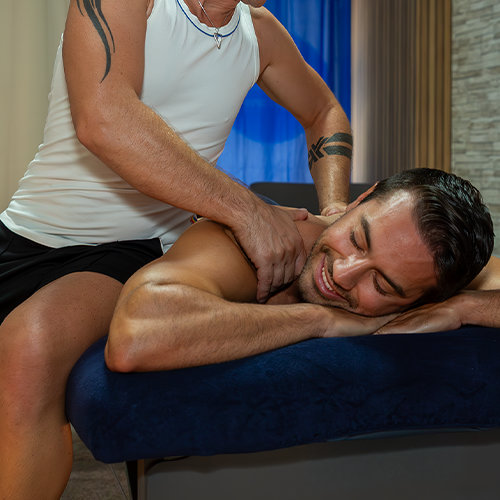
Kneading is one of the classic massage techniques. It involves gently grasping, lifting, rolling, and working the tissues, like kneading dough, but with far more finesse.
Benefits include:
- Softening contracted fibers
- Improving local mobility
- Creating a feeling of deep release
Franck often uses it on areas that commonly store tension: trapezius, upper back, lower back, glutes, thighs, and calves. Pressure is adjusted continuously, depending on your breathing and how the tissues respond.
Effleurage, friction, gliding pressure: the progression that changes everything
A good massage well-being for muscles does not begin straight into deep work. It follows a logic:
Effleurage (prepare)
Effleurage is a broad, gliding stroke that warms the skin and superficial tissues. It builds trust, prepares the nervous system, and announces the work.
Friction (target)
Friction is more localized. It helps address a precise area, often around a tension point.
Gliding pressure (structure)
Gliding pressure allows deeper work while staying fluid. It creates continuity and avoids a choppy feeling.
This progression is one of the clearest signs of a well-constructed massage: prepare, deepen, then release.
Which massage well-being style is best for muscles?
It depends on your goal:
- Sports massage: great after effort or during training periods, to support recovery and relax overused areas
- Deep tissue: slower and deeper, useful when tension is well established
- Swedish massage: structured and dynamic, a strong balance between relaxation and muscular effectiveness
- Lomi Lomi: flowing and enveloping, excellent for releasing without attacking
At Massage Gay Maspalomas, Franck often adapts the session by blending elements from different approaches to match what you need that day.
A good massage well-being for circulation: lightness and a feeling of flow
Blood circulation and the feeling of warmth
When circulation is stimulated, people often feel:
- Pleasant warmth
- Faster relaxation
- Lighter legs
Through its mechanical action, massage well-being supports venous return and helps improve tissue perfusion. It does not replace movement or hydration, but it can be a real boost.
Drainage: when gentleness is more effective
Drainage can sound very technical, as if it were reserved for specific practices. In reality, the idea is simple: gentle, rhythmic, directional movements that help restore a sense of flow and reduce heaviness.
What makes the difference:
- The direction of the strokes
- Slowness and regularity
- Moderate pressure (too much pressure reduces the desired effect)
If you arrive tired, after travel, or with heavy legs, a circulation-focused massage well-being is often an excellent choice.
Areas to prioritize
- Calves and ankles (often heavily used on vacation)
- Thighs and hips
- Back (large muscular chains)
- Arms and shoulders (posture, phone use, computer work)
Franck works these areas with special attention to comfort, keeping the movements fluid and consistent.
A good massage well-being for stress: calming the nervous system
Stress is not only in your head
Stress shows up in the body: clenched jaw, raised shoulders, short breathing, tight belly, light sleep. A good anti-stress massage well-being is an invitation to slow down.
The role of touch: safety, breathing, release
When touch is steady, respectful, and well-dosed, it helps the nervous system leave alert mode. That is often when the session becomes a true pause.
Helpful techniques:
- Slow, enveloping effleurage
- Continuous, reassuring pressure
- Gentle stretches (without forcing)
- Work on the neck, scalp, and shoulders
Why rhythm matters
An anti-stress massage does not need to be complicated. It needs to be coherent. A rhythm that changes too much prevents the mind from letting go. On the contrary, a regular pace and stable pressure build a sense of trust.
At Massage Gay Maspalomas, Francks approach is precisely to create a clear frame: a simple welcome, a quick listening moment to understand your need, then a session designed to gradually bring your stress level down.
Practical criteria to recognize a good massage well-being
Before the session
- You are asked a few simple questions (goal, sensitive areas, pressure preference)
- The flow of the session is explained
- You feel respected and safe
During the session
- Pressure is adjusted (you can ask for softer or deeper)
- Movements are fluid, without rushing
- The therapist does not jump randomly from one area to another
- You feel a progression, not a list of techniques
After the session
- You feel release and fuller breathing
- Tight areas feel softer
- You feel calmer, sometimes a little floaty (very common)
A strong indicator: you feel your body was understood, not just manipulated.
How Franck personalizes a session at Massage Gay Maspalomas
A successful massage well-being is rarely a fixed protocol. It is an adaptation.
Franck follows a simple logic:
- Identify your priority that day (recovery, relaxation, targeted tension)
- Choose the right combination of movements (effleurage, kneading, gliding pressure, stretching)
- Adjust pressure continuously
- Finish with a softer integration phase so you leave feeling light
This personalization is especially appreciated by an international clientele, often on holiday, sometimes tired from travel, heat, walking, or simply a stressful period.
Tips to get the most out of your massage well-being
Right before
- Avoid a heavy meal
- Arrive a few minutes early to settle
- Say clearly what you want: relaxation, recovery, a specific area
Right after
- Drink water
- Avoid immediately jumping into an intense activity
- Let your body integrate (a gentle walk is perfect)
How often?
There is no single rule. Some clients come back every three months, others once a year, others several times during their vacation. The key is to listen to your body and choose the right moment.
Conclusion
A good massage well-being is not just a trendy technique. It is a session that makes you feel measurably better on three levels: muscles, circulation, and stress. When these three pillars are respected, you leave more flexible, lighter, and calmer.
If you are looking for a massage well-being experience in Maspalomas, with a personalized and professional approach, Franck at Massage Gay Maspalomas works exactly in that spirit: listen, adapt, and offer you a truly high-quality pause.
Don’t wait to experience all these benefits book your next massage at Franck’s Massage Gay Maspalomas
FAQ
No. The article explains that people often confuse quality with intensity. A massage that is too hard, too fast, or not adapted can cause unnecessary soreness and irritate the tissues. Quality comes from precision, listening, and continuously adjusted pressure.
According to the article, a good massage is best recognized by its real impact on three pillars: muscles, circulation, and stress. The goal is to leave feeling more flexible, lighter, and calmer.
It combines coherent techniques such as kneading (to work on tension zones) and a clear progression: effleurage to prepare, friction to target, then gliding pressure to structure deeper work while staying fluid.
Because the feeling of lightness and “flow” usually comes from rhythmic, directional, consistent movements. The article highlights that gentleness, steadiness, and fluidity are often more effective than force, especially after travel or when you have heavy legs.
Before: a clear welcome and a short listening moment to understand your need.
During: coherent rhythm, stable and adapted pressure, a sense of safety.
After: you feel your body was understood, not just manipulated, with measurable benefits for muscles, circulation, and stress.