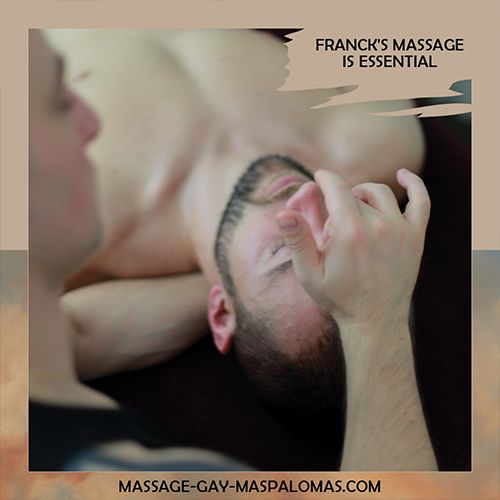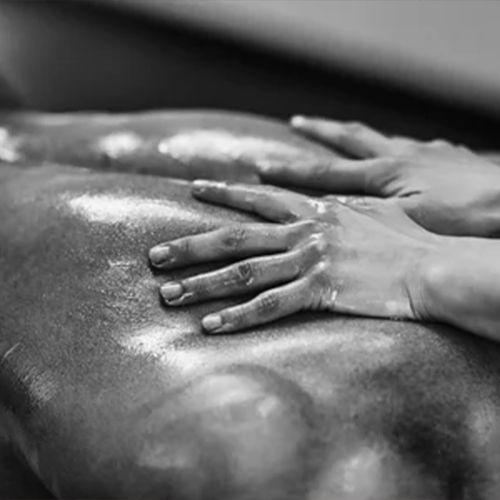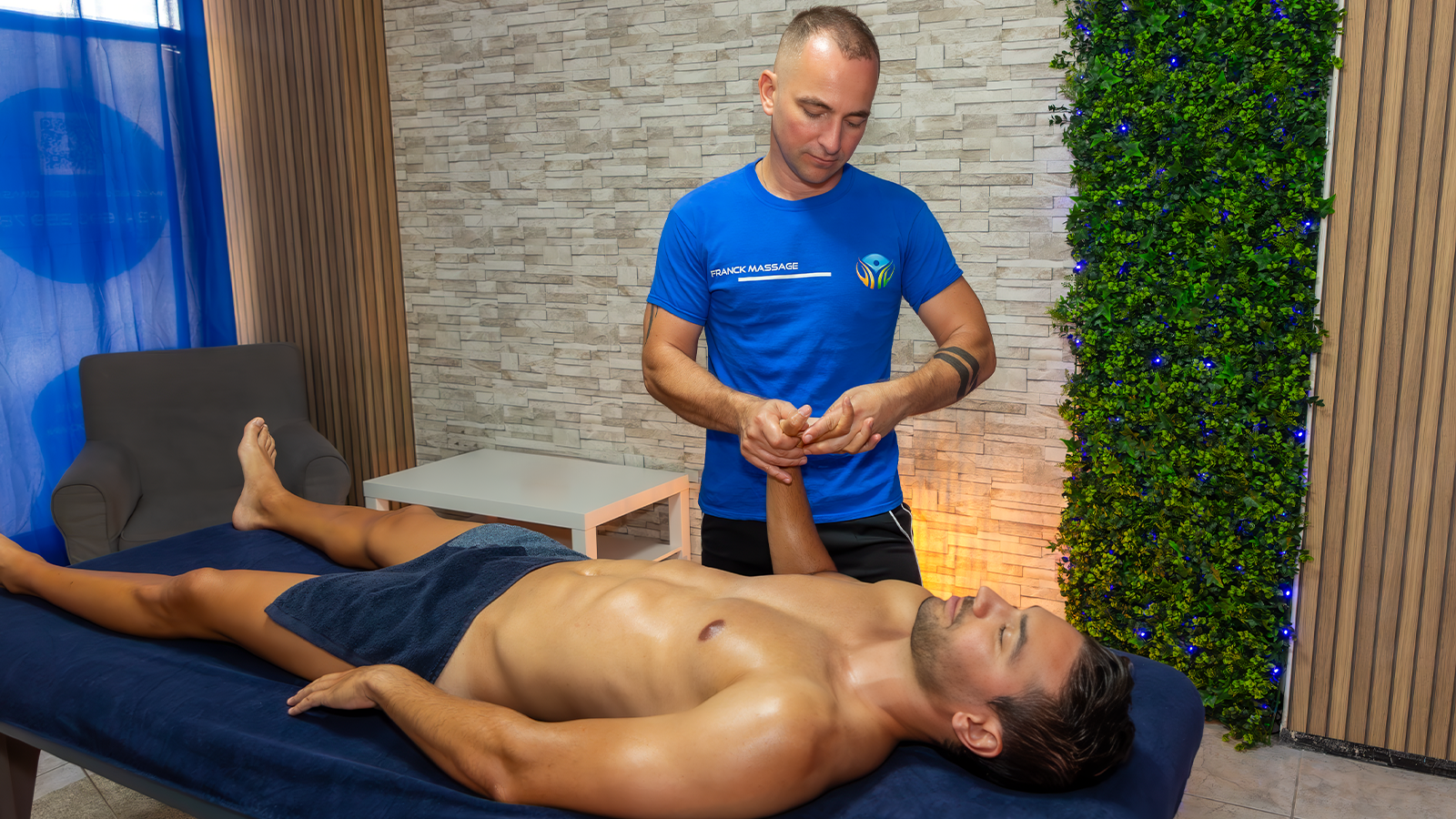
Hand massage: it’s often the simplest, most accessible form of touch… and yet one of the most powerful. Our hands are at the center of almost everything: working, driving, carrying, writing, caressing, reassuring. They’re also one of the most sensitive areas of the body, rich in nerve endings, directly connected to our brain and emotional system.
When you take the time to massage the hands, you don’t “just” help the fingers and wrists: you send the body a clear message of safety and release. That’s why, after a good session, you can feel deeply relaxed sometimes to the point of dozing off.
In this article, we focus on hand massage: its origins, its benefits, its techniques, and what touch can create between two men when there is respect, presence, and trust. And, in the background, the approach of Franck Massage at Massage Gay Maspalomas, where male well-being and quality of touch are at the heart of the experience.
Why hand massage works so quickly on body and mind
A highly innervated (and highly used) area
The hand is a dense “sensory map”: palm, fingertips, spaces between the fingers, back of the hand, base of the thumb… Each micro-area sends fine information to the nervous system. This is one reason why a hand massage can trigger almost immediate soothing.
At the same time, our hands take a lot: repetitive movements, gripping, forearm tension, psychological pressure (we clench our fists without noticing). Even without pain, we can build up deep fatigue.
Touch as the nervous system’s language
Touch isn’t only mechanical. When it’s slow, steady, and attentive, it becomes a language: “you can let go.” The body often responds with:
fuller breathing
less tension in the shoulders and neck
a feeling of warmth and freer circulation
a mind that slows down
That’s also why hand massage is often used as a gateway to overall relaxation: you start at the extremities, and the release spreads.
A bit of history: hands at the heart of care traditions
Hand massage has existed for centuries in many forms. In many cultures, hands are associated with transmission, care, and energy:
In Asian traditions, you find approaches based on pressure and stimulation of points in the hand (reflex, energetic, meridian-based depending on the school).
In the West, massage techniques became more structured through more “anatomical” methods (working tissues, muscles, mobility), while keeping the idea that the hands are a privileged place for soothing.
Without making medical promises, one thing stands out: throughout history, massaging the hands has been a universal gesture of care. It’s simple, human, and immediately felt.
The main benefits of hand massage
A well-executed hand massage can bring:
Deep relaxation and reduced stress
Because touch calms the nervous system, you often feel relaxation quickly especially when the massage happens in a calm environment with a steady rhythm.
Relief from tension linked to repetitive movements
Keyboard work, phone use, sports, luggage, driving… Hands and forearms can tighten. Massage helps release and restore suppleness.
Better body awareness
When we’re stressed, we “leave” our body a little. Hand massage brings you back to the present: subtle sensations, warmth, pressure, contact. It’s an excellent anchor.
A lighter feeling throughout the upper body
Hands connect to the forearm, elbow, and shoulder. By releasing the hand, you can feel a domino effect: shoulders drop, the neck softens.
The 3 steps of a successful hand massage
As you summarized well: a hand massage often unfolds in three phases.
1) Preparation: create warmth and trust
Goal: prepare the tissues and create a feeling of safety.
enveloping strokes
slow gliding movements
stable, reassuring contact
This phase is essential: it sets the tone for the depth of relaxation.
2) The massage: precision + flow
Here, you work deeper without harshness. Some classic techniques:
Palm work
circular pressure in the center of the palm
progressive pressure on denser areas
Finger mobilization
gentle rotations of each finger
light stretches (without pulling)
Spaces between the fingers
gliding pressure between the metacarpals
very soft “unlocking” movements
Wrist and base of the thumb
gliding strokes from the wrist into the hand
specific work on the thenar eminence (base of the thumb), often very tense
3) Toning gestures: wake up without breaking relaxation
You finish with clearer energy:
light tapping
rhythmic pressure
gentle shaking to “release”
The goal: leave relaxed, but present.
Techniques and styles: from relaxing to more structured
Hand massage can feel very different depending on the intention.
Relaxing (enveloping) approach
slow rhythm
global strokes
moderate pressure
Ideal for stress, mental fatigue, or to support a more sensory session.
More “sport” / structured approach
more targeted pressure
work on forearms and wrist
attention to areas of gripping and tension
Perfect when you feel real muscular fatigue linked to activity.
Touch between men: sensuality, presence, and a relationship of trust
Talking about hand massage also means talking about relationship. Because hands are intimate territory: you offer them, you receive them, you let yourself be guided.
Sensuality: when touch becomes a sensory experience
Sensuality doesn’t come from “doing more,” but from doing better:
a fluid rhythm
the right pressure
real attention
touch that doesn’t try to take, but to accompany
In a respectful setting, hand massage can naturally carry sensuality: warmth, shivers, release, the feeling of being welcomed. For some men, it’s even one of the simplest doors into deep relaxation, because it can feel less intimidating than direct contact on other areas.
Trust: the foundation of any quality massage
A good massage rests on an implicit agreement:
consent
respect for boundaries
communication (even non-verbal)
presence
When trust is there, the body lets go. When it isn’t, the body protects itself. That’s why a practitioner’s quality often shows in the details: how they make first contact, how they adjust pressure, how they read breathing.
Touch-massage: a meeting, not a performance
Hand massage is a great example: it’s not a technical demonstration. It’s a meeting between two nervous systems. The more conscious the touch, the deeper the effect.
A 5-minute mini routine to do at home
Between sessions, here’s a simple routine:
Warm up: rub palms together for 20–30 seconds.
Palm: slow circles with the thumb, 30 seconds per hand.
Thumb base: press and release the base of the thumb, 20 seconds.
Fingers: mobilize each finger (gentle rotation), 5 seconds each.
Toning finish: light tapping + shake hands for 10 seconds.
Franck’s approach in Maspalomas: integrating hand massage into a male well-being experience
Even though this article focuses on hand massage, it’s useful to remember the context: Franck Massage (Massage Gay Maspalomas) highlights an approach centered on relaxation and balance, with fluid, enveloping touch drawing in particular from Californian and Swedish techniques in his “Essential Massage.”
In practice, that means hand massage can naturally be integrated into a more global session: as an opening (to install relaxation), as a key moment (to deepen it), or as a finishing touch (to leave grounded and light).
Practical info (if the reader wants to book)
Hours: Monday to Friday, 09:00–20:00
Address: Prisma Shopping Center, Av. de España, 7, 35100 San Bartolomé de Tirajana (Las Palmas)
Booking: via the “Booking” page on the website
Conclusion
Hand massage: it’s a simple, universal practice, and incredibly effective for calming the mind, releasing the body, and returning to a feeling of presence. With a good structure (preparation, massage, toning gestures), a few precise techniques, and above all a quality of touch based on trust, it can become a deeply restorative experience.
And when that touch is shared between men in a respectful setting, it can also carry a natural sensuality: that of real contact, full attention, and a letting go that has nothing to prove.